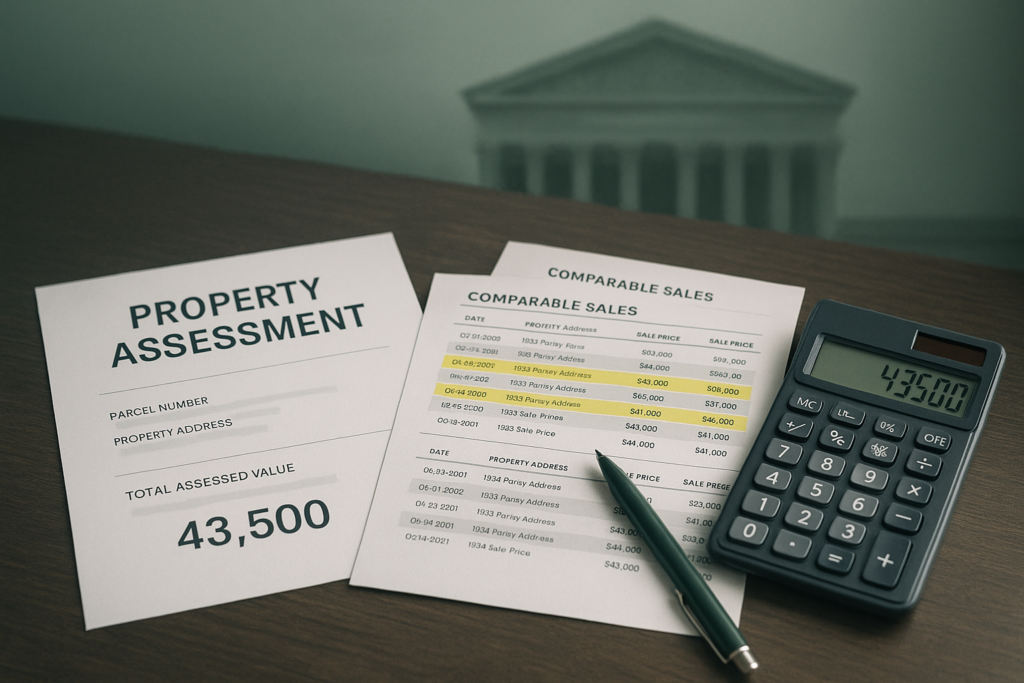

Tactics page. Use this for broad ways to reduce property taxes. If you are ready to challenge a specific assessment, use the formal appeal guide.
Quick answer: lower property taxes by fixing the right problem first, bad facts on the record card, missing exemptions, or an assessed value that really does outrun market evidence. Most owners waste time arguing about value before checking the easier wins.
Need the whole strategy first? Start with the Property Tax Guide.
Fast checklist
- Pull the record card and verify every physical detail.
- Confirm homestead and every other exemption you might qualify for.
- Compare the assessed value to recent similar sales.
- Calendar the appeal deadline the day the notice arrives.
| If your situation is… | Best move | Why | Main risk |
|---|---|---|---|
| The county record has errors | Fix the record first | Bad facts poison every downstream tax decision | Arguing value before the basics are corrected |
| You qualify for exemptions that are missing | File them now | This is often the fastest recurring savings | Assuming closing or age made them automatic |
| The record is right but the value still looks inflated | Appeal on time | This is where comparable sales matter | Missing the filing window |
| You are planning major improvements | Check the tax impact before you start | Not every project earns its tax hit back | Blind over-improvement |
Where the savings usually come from
- Record cleanup: wrong square footage, bath count, lot details, or improvements.
- Exemption cleanup: homestead, senior, veteran, disability, widow, and other local breaks.
- Assessment challenge: only after the facts and exemptions are squared away.
Worked examples
Tax bill spikes after purchase: check whether caps reset and whether prior-owner exemptions disappeared before assuming the county simply overvalued you.
Record card shows wrong living area: this is often the cleanest fix and may reduce the value issue without a full fight.
Everything is accurate but nearby closed sales support less: now it is time to build the appeal package.
Avoid these time-wasters
- Zillow screenshots instead of closed comparable sales.
- Confusing assessed value, taxable value, and market value.
- Appealing value when the real problem is an exemption or tax-rate change.
- Missing the deadline because you started researching too late.
Best next step: Pull the record card tonight, then use How to Read Your Property Tax Bill, Florida Homestead Exemption, and Assessed Value vs Market Value before filing the wrong kind of challenge.
Official resources and reference points
This article is general homeowner education, not legal or tax advice. Deadlines and exemptions are local, so confirm the current rules with the agencies that actually administer them.
- Florida DOR property tax exemptions
- Florida DOR Value Adjustment Boards
- USA.gov state and local tax help
Official resources and reference points
This page is homeowner education, not a property-specific appraisal, legal opinion, tax advice, or lender/carrier instruction. Use the tax bill, trim notice, exemption status, and local filing deadline before you assume the problem is the assessed value itself.
Why this article is worth trusting
Caleb Hollis reviewed this page. He reviews homeowner education on home value logic, cost realism, Florida housing questions, and decision quality.
See the reviewer profile and editorial team profile for who does what. OwnerHacks publishes homeowner education, not property-specific appraisal work, legal advice, tax advice, lending advice, or insurance advice.
OwnerHacks updates articles when rules, costs, or homeowner decision factors materially change. If something looks outdated, use our contact page and we will review it.