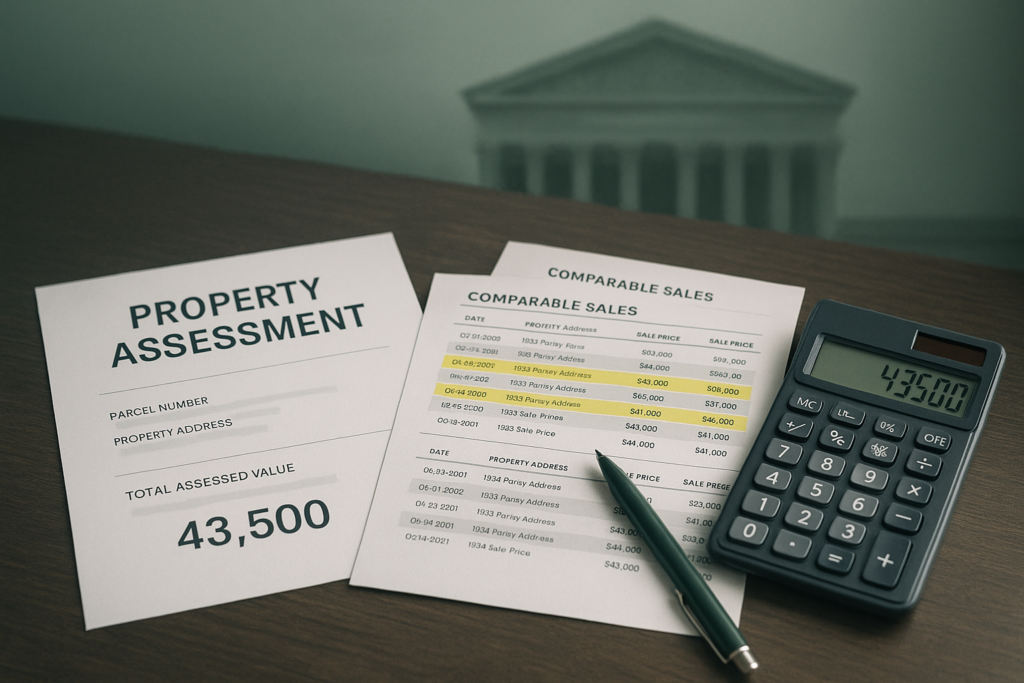
Use this page for examples. This Casey Vockell-contributed article now focuses on how Florida portability works in real calculations. For the full rule-by-rule guide, use Florida Save Our Homes Portability. For a quick comparison, use Homestead Exemption vs Portability.
Quick answer: portability in Florida lets an owner transfer some or all of their accumulated Save Our Homes tax benefit from one Florida homestead to another, subject to the cap, timing rules, and the value relationship between the old and new homes. It is not a transfer of your old tax bill. It is a transfer of tax-saving protection.
Need the broader tax framework first? Start with the Complete Guide to Property Taxes for Florida Homeowners.
Contributing expert
Casey Vockell, owner of My Exemption Check, contributed expert perspective for this article on Florida Save Our Homes, portability, property tax exposure, and valuation-related tax decisions.
| Question | Short answer | What decides it | Best next move |
|---|---|---|---|
| What transfers? | Save Our Homes benefit | The gap between just value and assessed value on the old homestead | Pull the old county record first |
| Can every mover use it? | No | You need qualifying Florida homestead status and timely filing | Confirm both old and new eligibility |
| Do you always get the full amount? | No | Move-up vs move-down formula and cap rules matter | Run both scenarios before buying |
| Is it automatic? | No | Application and deadline compliance matter | File quickly after purchase |
Portability decision route
- You sold one Florida homestead and bought another: compare old assessed vs just value first.
- You are moving up in price: check whether the full benefit can transfer within the cap.
- You are unsure whether you still qualify: confirm new homestead status before chasing portability math.
Risk flags homeowners miss
- Portability has filing deadlines and is not automatic.
- The transfer amount is not the home’s market value difference.
- Using old tax bills without understanding capped value can create bad purchase assumptions.
Decision route: what kind of move are you making?
| Move type | What usually happens | Main watch-out | Best next move |
|---|---|---|---|
| Moving to a more expensive Florida homestead | You may carry forward the full portable benefit up to the cap | Owners often think this means the new tax bill stays low forever | Estimate the new bill with portability, not without reality |
| Moving to a less expensive Florida homestead | The transferred benefit may be reduced by formula | This is where people overestimate savings the most | Run a proportional-transfer estimate before closing |
| Same-range move | Portability can still help a lot | Paperwork mistakes can waste the benefit | File homestead and portability right away |
| Leaving Florida or losing homestead status | Portability generally does not work the way people hope | This is not a generic interstate trick | Verify the rules with the county before making assumptions |
What portability means in plain English
Over time, Save Our Homes can create a large gap between a Florida home’s market-facing value and its assessed value for tax purposes. Portability is the mechanism that lets you carry some of that assessment advantage into your next Florida homestead instead of starting from scratch at full assessed exposure.
Worked examples
Example 1: Move-up buyer with meaningful accumulated tax savings
A homeowner has owned a Florida homestead for years and built a substantial Save Our Homes benefit. They buy a more expensive replacement homestead. If they qualify and file correctly, a large part of that old tax advantage can move with them, softening the new assessed value.
Example 2: Move-down buyer who assumes too much
An owner sells a high-value Florida homestead and buys a less expensive replacement property. They assume the full old tax advantage transfers. It usually does not work that cleanly. The move-down formula can reduce the transferable benefit.
Example 3: Good eligibility, bad execution
The homeowner clearly qualifies in substance, but misses the filing path or deadline. Portability is not self-executing. Good facts with sloppy paperwork can still produce a bad outcome.
Watch-outs
- Portability is not your old tax bill following you around.
- It is not automatic. Filing matters.
- Move-down buyers often overestimate the transferred benefit.
- The cap matters. Very large accumulated savings do not always move in full.
- Your new tax bill can still be materially higher. Portability helps, but it does not repeal math.
Simple action table
| Your question | What to check | Best immediate action |
|---|---|---|
| Do I have portable benefit to transfer? | Old homestead just value versus assessed value | Pull the last tax bill and county record card |
| Will I get all of it? | New home value relative to old home and current cap rules | Run move-up and move-down estimates before buying |
| How do I avoid losing it? | Homestead plus portability filing timing | Check county filing deadlines immediately after purchase |
Best next-step utility
| If you need to understand… | Read this next | Why |
|---|---|---|
| The deeper portability mechanics | Florida Save Our Homes Portability | That page goes deeper into the transfer logic |
| Homestead basics first | Florida Homestead Exemption Guide | Portability sits on top of homestead qualification |
| Why assessed value and market value are not the same | Assessed Value vs Market Value | Most portability confusion starts here |
Bottom line
Florida portability lets you move some of your Save Our Homes advantage with you, but only if you qualify, file correctly, and keep your expectations realistic. It is powerful, but it is not magic and it is definitely not automatic.
If this, do this next
- You have not confirmed homestead on the new property: do that first.
- You need to understand the broader concept: compare homestead exemption vs portability next.
- You are checking whether the county’s taxable number makes sense: read assessed value vs market value before filing anything.
Best next step: Read Florida Save Our Homes portability, Florida homestead exemption, and assessed value vs market value.
Official resources and reference points
This page is homeowner education, not a property-specific appraisal, legal opinion, tax advice, or lender/carrier instruction. Use the tax bill, trim notice, exemption status, and local filing deadline before you assume the problem is the assessed value itself.
Why this article is worth trusting
Caleb Hollis reviewed this page. He reviews homeowner education on home value logic, cost realism, Florida housing questions, and decision quality.
See the reviewer profile and editorial team profile for who does what. OwnerHacks publishes homeowner education, not property-specific appraisal work, legal advice, tax advice, lending advice, or insurance advice.
OwnerHacks updates articles when rules, costs, or homeowner decision factors materially change. If something looks outdated, use our contact page and we will review it.