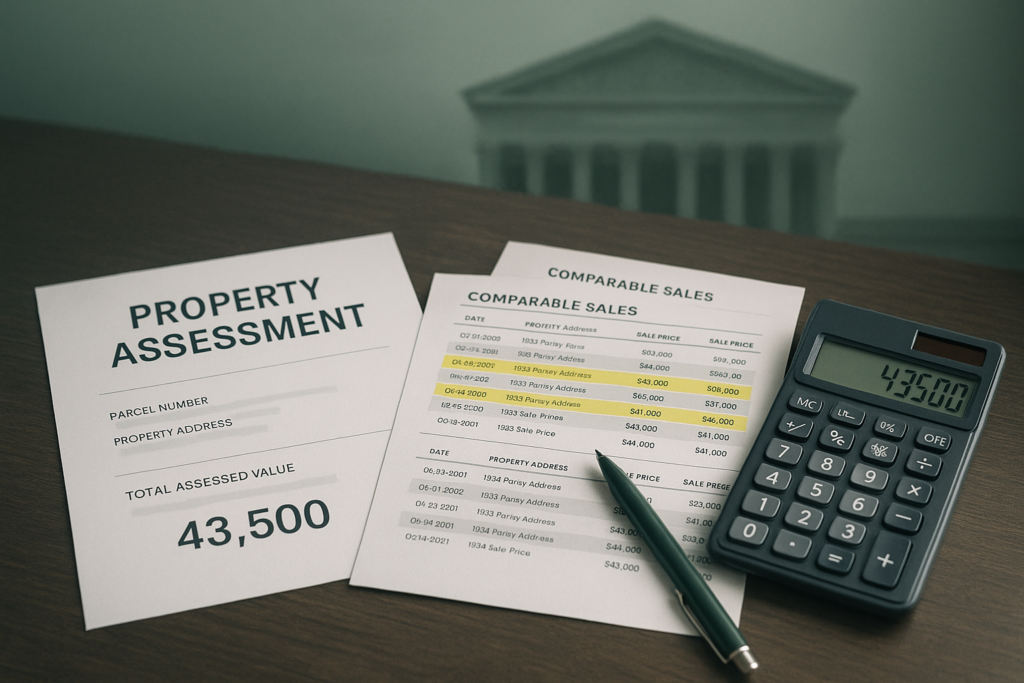

- Florida homestead matters most when you file on time, separate homestead from portability, and stop trusting the seller’s old tax bill.
- Scenario picker
- Florida tax-benefit choices
- Worked decision paths
- Risk and reward cards
- Bottom line
Show all sections
- Quick answer: how Florida homestead actually saves money
- Florida homeowner decision guide
- Worked example: why the cap matters more the longer you stay
- Common mistakes that cost homeowners money
- What the Homestead Exemption Does
- The Save Our Homes Cap: Where the Real Money Is
- Who Qualifies
- How to Apply
- Portability: Taking Your Tax Savings With You
- Common Mistakes to Avoid
- The Bottom Line
- Sources reviewed
Homestead page. Use this for Florida homestead exemption eligibility and filing. Portability is linked only where moving-related tax savings matter.
If you own a home in Florida and haven’t filed for homestead exemption, you’re overpaying your property taxes. Simple as that. This is one of the biggest tax breaks the state hands to homeowners, and the application takes about fifteen minutes. Yet every single year, thousands of new buyers blow right past the deadline because nobody told them. They figured it was automatic.
Nope. You file or you miss out. Let’s break it down.
Florida homestead matters most when you file on time, separate homestead from portability, and stop trusting the seller’s old tax bill.
Use homestead to protect your primary-residence tax bill. Use portability only when you moved from one Florida homestead to another. File both deliberately because neither fix happens just because you closed.
Florida owners get in trouble when they mix the base exemption, the Save Our Homes cap, and portability. Treat this as a filing-order decision first, then a tax-estimate decision.
Scenario picker
File homestead now
Best for: this is your new Florida primary residence
Why it wins: That is the first tax protection step for most owner-occupants.
Add portability
Best for: you moved from one Florida homestead to another
Why it wins: The old cap benefit may follow you, but only if you handle it correctly.
Audit the bill
Best for: homestead is on file but the tax number still looks wrong
Why it wins: Now you separate exemption issues from assessment or non-ad valorem issues.
Florida tax-benefit choices
| Decision point | Homestead exemption | Portability | Appeal / bill review | Usually better |
|---|---|---|---|---|
| Best when | New primary residence | Moving between Florida homesteads | Taxes still look wrong after filing | File benefits before arguing value |
| Main purpose | Base tax savings and protections | Transfers prior Save Our Homes benefit | Fixes remaining tax issues | Sequence matters |
| Big risk | Assuming it is automatic | Thinking portability replaces homestead | Using seller bill as your future bill | Buyer confusion is common |
| Best next step | Meet county filing deadline | Gather old and new property records | Read the notice line by line | Benefits first, challenge second |
Worked decision paths
First Florida primary residence after closing
Call: File homestead immediately
This is the simple path most new owners should attack first.
Sold a Florida homestead and bought another
Call: File homestead, then portability
Portability only works on top of the new homestead setup.
Homestead posted but taxes still jumped hard
Call: Review assessed, taxable, and non-ad valorem amounts
That is often a bill-structure or reset issue, not a failed homestead issue.
Risk and reward cards
Homestead upside
- Base tax savings
- Annual tax-growth protection
- Better long-term ownership economics
Homestead risk
- Missed county deadline
- Assuming it happens automatically
- Using old seller taxes as a forecast
Portability upside
- Transfers part of prior tax benefit
- Can save real money after a move
- Works well for long-time Florida owners
Portability risk
- Late filing hurts
- Confusing it with homestead itself
- Bad assumptions about transfer amount
Bottom line
File homestead first, handle portability only if it applies, and never base your tax expectations on the seller’s protected bill.
Best next move
Check your county filing deadline, then compare this guide with homestead vs portability and assessed value vs market value before guessing why the bill moved.
Quick answer: how Florida homestead actually saves money
Florida homestead does two separate things, and homeowners often focus on the smaller one. First, it removes up to $50,000 of taxable value from your primary residence. Second, and often more valuable over time, Save Our Homes limits annual assessment growth on homesteaded property. The first benefit cuts the current bill. The second protects you for years if values keep climbing.
| Benefit | What it does | Why it matters |
|---|---|---|
| First $25,000 exemption | Applies to all taxing authorities, including school taxes | Immediate tax reduction for most homeowners |
| Second $25,000 exemption | Applies to assessed value between $50,000 and $75,000, excluding school taxes | Adds more savings, but not across every line item |
| Save Our Homes cap | Limits assessed-value growth after homestead is in place | Often becomes the biggest long-term money saver |
| Portability | Lets eligible owners transfer some tax benefit to a new Florida homestead | Can soften the tax shock when you move |
Florida homeowner decision guide
- Just bought your primary residence? File homestead as soon as you are eligible and do not assume the county will do it for you.
- Planning a move inside Florida? Learn portability before selling, because losing a large assessment gap can get expensive fast.
- Own a rental, second home, or short-term rental property? Homestead is generally not for those properties.
- Married, divorced, or changed title recently? Recheck eligibility and documentation instead of assuming last year’s setup still works.
Worked example: why the cap matters more the longer you stay
Say your home’s market value rises from $350,000 to $500,000 over several years. Without homestead, the assessed value can chase the market much more closely. With homestead and the Save Our Homes cap in place, the taxable value may lag far behind. That gap is where long-term owners quietly save serious money. It is also why buyers moving from one Florida homestead to another should pay attention to Save Our Homes portability before they list and buy.
Common mistakes that cost homeowners money
- Missing the filing deadline because someone said it was automatic.
- Claiming homestead where you do not actually reside full time.
- Forgetting that trusts, title changes, or marital-status changes can affect paperwork.
- Moving to a new home and failing to plan for the assessed value reset.
Next step: if you want the broader tax picture, read the complete guide to Florida property taxes, how portability works, and the mistakes that trigger expensive surprises.
What the Homestead Exemption Does
It removes up to $50,000 from the taxable value of your primary residence. Not $50,000 off the bill itself. Off the assessed value that determines the bill. There’s a difference. But either way, it’s significant.
Here’s how the $50,000 splits up. The first $25,000 applies to everything, school district taxes included. The second $25,000 only kicks in on assessed value between $50,000 and $75,000, and it covers everything except school taxes. A little convoluted? Sure. But the savings are real.
Quick math. Home assessed at $300,000 with homestead exemption? Taxed on $250,000. Depending on your county’s millage rate, that’s somewhere between $700 and $1,200 saved per year. Every year. For as long as you own the place and keep it as your primary residence.
The Save Our Homes Cap: Where the Real Money Is
The $50,000 exemption gets all the attention. But Save Our Homes? That’s the sleeper benefit. Once your homestead is active, your assessed value can only go up by 3% per year, or the Consumer Price Index, whichever is less. Doesn’t matter what the market does.
Think about that. Home values jump 10% in a year? Your assessment goes up 3%. Period. The gap between what your home could sell for and what you’re actually taxed on just keeps growing. Year after year after year.
Homeowners who’ve had homestead in place for a decade? Their assessed values trail market value by $50,000 to $200,000. Sometimes more. That gap means thousands in annual savings that compound the longer you stay.
Flip side. Buy a new home and the sticker shock hits hard. Your old cap doesn’t carry over automatically. The new property resets to full market value. New buyers feel this one deep in the wallet, especially anyone who bought during the 2020 to 2023 run-up.
Who Qualifies
Three things, all as of January 1st:
1. Your name is on the deed. Doesn’t matter if there’s a mortgage. Ownership counts.
2. You actually live there. Primary residence only. Investment property, vacation homes, that condo you rent on Airbnb? None of those qualify.
3. You’re a Florida resident. Florida driver’s license or state ID showing the property address. Voter registration at the same address isn’t technically required, but it helps prove residency if anyone questions it.
How to Apply
Go through your county Property Appraiser’s office. Most counties in Florida let you file online now. You can also do it in person or by mail if you prefer.
Deadline: March 1st of the year you want coverage. Closed on a house in October 2025? You have until March 1, 2026 to file for the 2026 tax year. Miss that date and you sit out an entire year. Twelve full months of overpaying because you didn’t file a form. Not great.
What you’ll need: your recorded deed or closing statement, Florida driver’s license or ID, Social Security number (and your spouse’s if applicable), and a permanent resident card if you’re not a U.S. citizen.
Good news: once you’re approved, it renews automatically every year. No annual refiling unless you move.
Portability: Taking Your Tax Savings With You
Selling your Florida home and buying another one in the state? Portability lets you transfer up to $500,000 of your Save Our Homes benefit to the new property. This can cut your tax bill on the replacement home significantly.
The catch. You need to file for homestead on the new home AND submit a separate portability application. Both within three years of dropping homestead on the old property. Everything goes through the Property Appraiser in your new county.
Fair warning: it’s not a straight dollar-for-dollar transfer. The calculation depends on the gap between your assessed value and market value, and whether you’re buying up or down. Your county Property Appraiser’s office can walk you through the exact math. Worth a phone call.
Common Mistakes to Avoid
Missing March 1st. Hard deadline. Late applications can sometimes squeak through by September, but that involves a penalty and there’s no guarantee. Don’t risk it.
Assuming it’s automatic. It never is. Not in Florida. Your closing agent or realtor might have mentioned it. A lot of them don’t. This one’s on you.
Keeping homestead on a property you’ve moved out of. Moved to a new house but still claiming homestead on the old one? That’s fraud in Florida. Actively investigated. Actively prosecuted. When you move, either transfer homestead to the new place or remove it entirely.
Forgetting to file for portability. So many people sell one Florida home, buy another, and never transfer their SOH savings. That’s real money, sometimes tens of thousands of dollars, just gone. Because nobody filed the form.
The Bottom Line
Florida’s homestead exemption is one of the best financial perks of owning property in this state. The $50,000 assessment reduction plus the 3% annual cap can save tens of thousands over the life of your ownership. But none of it kicks in unless you file.
Haven’t done it? Go to your county Property Appraiser’s website. Today. Fifteen minutes of paperwork. Savings that last as long as you own the home.
Related: How to Lower Your Property Taxes: 7 Strategies That Actually Work
See also: How to Read Your Property Tax Bill: A Line-by-Line Breakdown
Sources reviewed
- Florida Department of Revenue property tax and exemption guidance
- Florida Department of Revenue Value Adjustment Board appeal guidance
- County property appraiser assessment and exemption references
- County tax collector billing and millage references
Keep Reading
- How to Read Your Property Tax Bill: A Line-by-Line Breakdown
- CDD Fees Explained: The Hidden Cost of Buying in a New Community
- The Real Cost of Owning a Home: What Nobody Told You Before You Bought
Still sorting out your Florida move? Read Save Our Homes Portability if you changed homesteads, and these common homestead mistakes if you want to avoid missing money on the table.
Official resources and reference points
This page is homeowner education, not a property-specific appraisal, legal opinion, tax advice, or lender/carrier instruction. Use the tax bill, trim notice, exemption status, and local filing deadline before you assume the problem is the assessed value itself.
Why this article is worth trusting
Caleb Hollis reviewed this page. He reviews homeowner education on home value logic, cost realism, Florida housing questions, and decision quality.
See the reviewer profile and editorial team profile for who does what. OwnerHacks publishes homeowner education, not property-specific appraisal work, legal advice, tax advice, lending advice, or insurance advice.
OwnerHacks updates articles when rules, costs, or homeowner decision factors materially change. If something looks outdated, use our contact page and we will review it.