- Quick answer: Florida insurability usually comes down to four systems, but the real decision is whether the house is fixable at a sane cost
- Fast routing: should you move forward, renegotiate, or walk?
- Worked examples: how the same inspection can lead to different decisions
- Mistakes buyers make here
- The Four Systems That Insurance Companies Care About
- What’s a 4-Point Inspection?
You found the house. You love the neighborhood. The price works. You’re ready to make an offer.
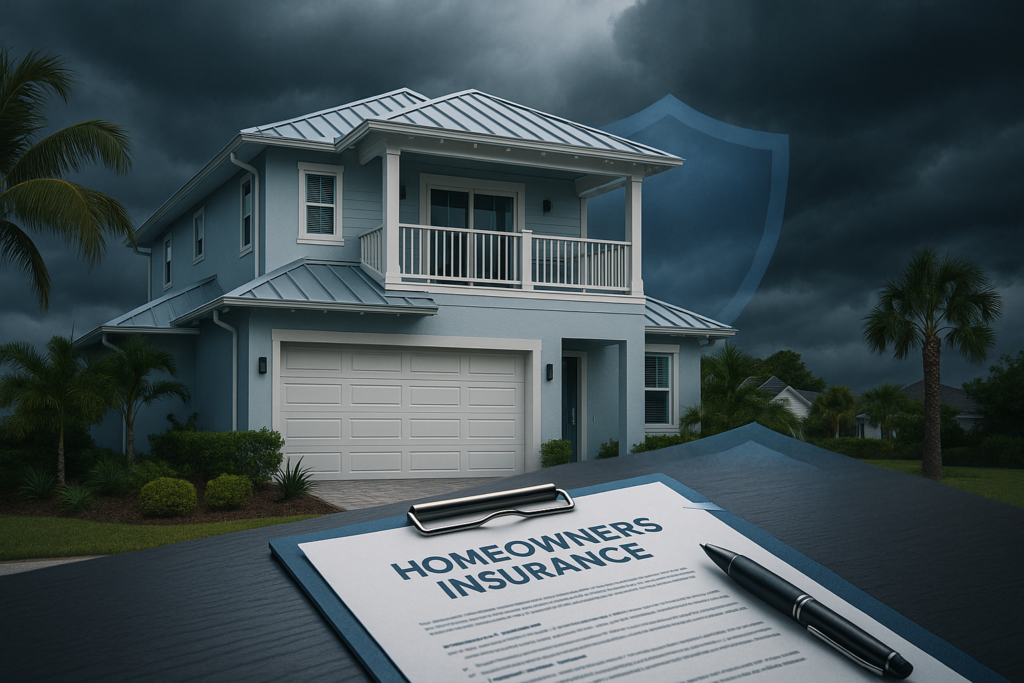
But here’s what most buyers don’t think about until it’s almost too late: can you actually get insurance on this thing? And if you can, how much is it going to cost you?
In Florida, those aren’t casual questions. They’re deal-breakers.
Quick answer: Florida insurability usually comes down to four systems, but the real decision is whether the house is fixable at a sane cost
The roof, plumbing, electrical, and HVAC are the underwriting checkpoints, but buyers need one more filter: if those systems are weak, how expensive is the path back to insurable? A house can still be a good buy with one ugly system. A house with multiple aging systems, weak documentation, and little seller flexibility can become an insurance problem disguised as a real-estate deal.
| System or issue | What carriers usually want | What buyers should verify | When to get worried fast |
|---|---|---|---|
| Roof | Acceptable age, condition, and remaining life | Permit history, age, visible wear, wind features, and any active leaks | Old roof plus condition notes or no proof of replacement |
| Plumbing | Low leak risk and no blacklisted materials | Pipe material, water heater age, repipe history, and prior water-loss signs | Polybutylene, chronic leak history, or visible patchwork |
| Electrical | Safe panel and service setup | Panel brand, amperage, rewiring history, and inspector comments | Federal Pacific, Zinsco, or aluminum branch wiring issues |
| HVAC | Working system with reasonable remaining life | Age, condition, leak risks, drain issues, and replacement cost | Very old unit plus signs of deferred maintenance |
Fast routing: should you move forward, renegotiate, or walk?
- One weak system, repair cost is known, and you can still get coverage: renegotiate or request seller concessions.
- Multiple systems are aging and coverage is uncertain: slow down and get insurance answers before you get emotionally attached.
- Quotes only work with major exclusions or brutal pricing: treat that as part of the purchase price, not a minor annoyance.
- You already own the house: use a 4-point and wind-mit report to figure out what improvement moves the insurance needle first.
Worked examples: how the same inspection can lead to different decisions
Buyable with a plan: a 2004 house needs a new HVAC soon, but the roof, plumbing, and electrical are clean and quotes are available. That is usually a budgeting issue, not a deal killer.
Needs a hard renegotiation: a 1995 house has an aging roof and a flagged panel, but you can still insure it if both are addressed within months. That should change the numbers now, not later.
Potential walk-away: an older home has a marginal roof, polybutylene pipes, sketchy electrical, and no clean quote path during inspection. That is not a cute fixer. That is an insurance trap.
Mistakes buyers make here
- Ordering a general home inspection and assuming that answers the insurance question.
- Waiting for the lender or agent to flag an insurance issue after the contract is already moving.
- Treating wind mitigation as optional when it may materially change the premium.
- Ignoring documentation gaps when a seller says major systems were replaced.
Next step: use this page with why Florida homes become uninsurable, 4-point inspection, and wind mitigation so you can separate fixable issues from unpriced risk before closing.
The Four Systems That Insurance Companies Care About
When an insurance company evaluates a home in Florida, they’re zeroing in on four specific components. Not the kitchen. Not the floors. Not whether the bathroom has a rain shower head. They want to know about:
The roof. This is the big one. Florida’s weather puts roofs through absolute punishment — hurricanes, tropical storms, relentless sun, daily afternoon thunderstorms six months out of the year. Insurance companies want to know the age, material, and condition. A roof that’s past its expected lifespan? That’s a red flag. Some carriers won’t touch a home with a roof older than 15 years. Others draw the line at 20. And if it’s got visible damage or wear? You might be looking at a full replacement before anyone will write you a policy.
The plumbing. Specifically, what kind of pipes are in the walls. Copper? PVC? CPVC? Those are fine. Polybutylene? That’s a problem. Poly pipes (common in homes built between the late ’70s and mid ’90s) are known for splitting and causing water damage. Some insurers flat-out refuse to cover homes with polybutylene plumbing. Others will cover it, but expect to pay for it.
The electrical system. Old wiring isn’t just an insurance issue — it’s a safety issue. Aluminum wiring from the ’60s and ’70s is a known fire risk. Federal Pacific and Zinsco breaker panels? Notorious for failing to trip during overloads. If an inspector flags any of these, you’re looking at rewiring or panel replacement before most companies will issue a policy.
The HVAC system. Your air conditioning isn’t optional in Florida (obviously). Insurance companies want to see that it works, that it’s reasonably current, and that it’s not going to cause water damage through leaks or condensation issues. Units over 20 years old are going to raise eyebrows.
What’s a 4-Point Inspection?
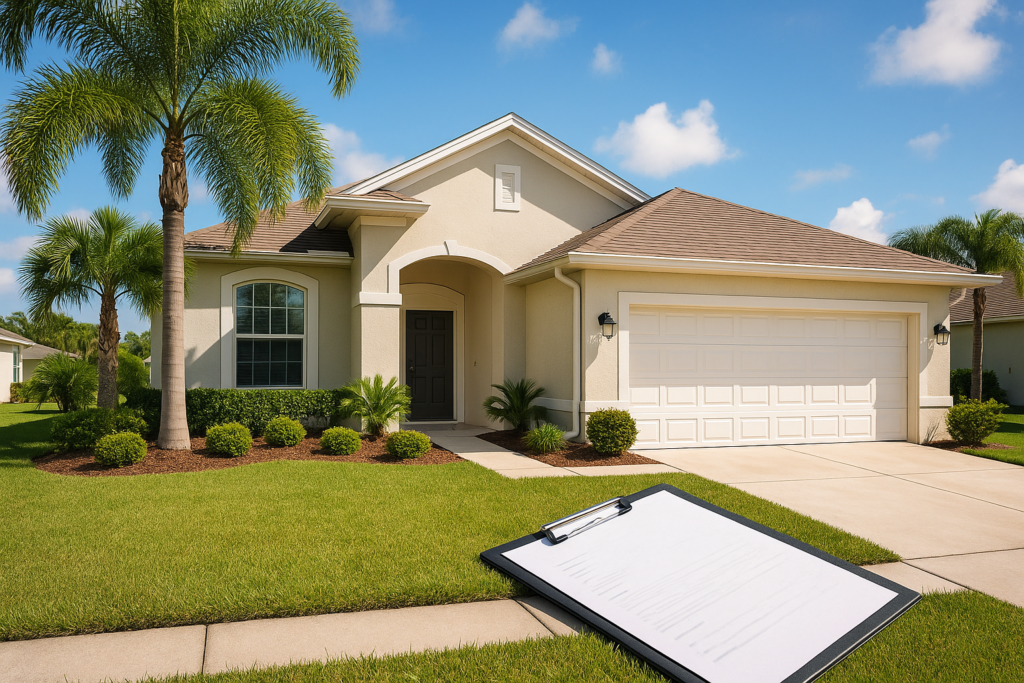
A 4-point inspection is exactly what it sounds like. A licensed inspector evaluates those four systems — roof, plumbing, electrical, and HVAC — and produces a report that your insurance company uses to decide whether to cover the home and at what price.
Here’s the thing most people don’t realize: this isn’t the same as a full home inspection. A general home inspection looks at everything from the foundation to the attic. A 4-point is narrower. It’s specifically designed for insurance underwriting purposes.
When do you need one? Most Florida insurance companies require a 4-point inspection if the home is 20 years old or older. Some companies have started requiring them on homes as young as 15 years. And it’s not a one-time thing. If you switch insurance carriers on an older home, the new company will probably want a fresh report.
The inspection typically runs between $100 and $250. That’s a small price to pay for knowing exactly what you’re dealing with before you commit to a purchase.
Wind Mitigation: Where the Real Savings Are
So the 4-point tells you whether you can get insurance. The wind mitigation inspection tells you how much of a discount you can get on it.
Florida law (Statute §627.0629) requires insurance companies to offer discounts to homeowners whose properties have wind-resistant features. We’re talking about things like:
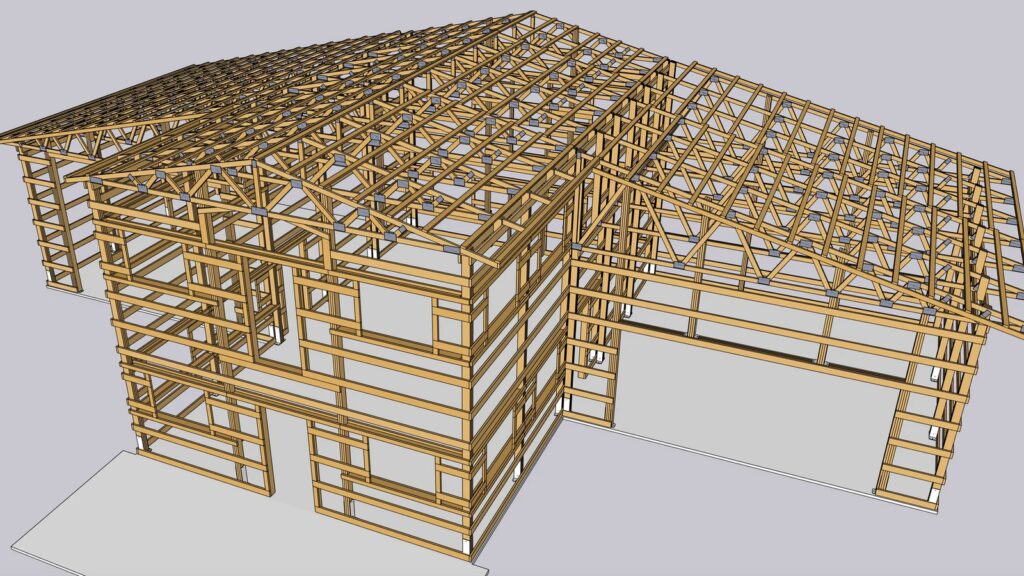
- Roof-to-wall connections — Hurricane straps and clips vs. just nails (toe nails, which is literally just nails hammered in at an angle — not great when 120 mph winds are trying to pull your roof off)
- Roof deck attachment — How the plywood is secured to the trusses
- Roof covering — The age and type of your shingles or tiles
- Roof geometry — Hip roofs perform better in high winds than gable roofs
- Opening protection — Hurricane shutters, impact windows, or nothing at all
- Secondary water resistance — An extra barrier under your roof covering that prevents water intrusion if shingles blow off
These discounts can be massive. We’re talking up to 45% or more off your wind premium in some cases. I’ve seen homeowners save thousands per year just from a single wind mitigation report.
When is it needed? If your home was built before 2002 (when Florida implemented its current statewide building code), a wind mitigation inspection is especially important. Homes built in 2002 or later were already constructed to stronger wind standards, so many of those features are built in. But for older homes, you need an inspector to verify what’s actually there.
The inspection usually costs between $75 and $150. If it saves you $1,500 a year on premiums, that’s the best return on investment you’ll find in real estate.
Why This Matters Before You Buy (Not After)
Here’s where a lot of buyers get burned. They fall in love with a charming 1985 ranch in a great school district. They negotiate the price, they get under contract, and then — surprise — the 4-point comes back showing polybutylene pipes throughout, a 22-year-old roof, and an electrical panel that’s on the insurance industry’s blacklist.
Now they’re looking at $15,000 to $30,000 in repairs just to qualify for a basic homeowners policy. Or worse, they close on the house without doing their homework and find out they can only get a bare-bones policy with sky-high premiums and major exclusions.
Do your due diligence before you decide to buy. Get that 4-point. Get the wind mitigation. Know what you’re walking into. It takes a couple hundred bucks and a few days, and it can save you from a financial nightmare.
The Rule of Thumb
Newer homes in Florida will almost always have lower insurance premiums than older ones. That’s not an opinion — it’s math. Post-2002 construction meets stricter building codes, uses modern materials, and typically has wind-resistant features already in place. The roof is younger, the plumbing is current, the wiring is up to code, and the HVAC hasn’t been running for two decades.
Does that mean you shouldn’t buy an older home? Not at all. Plenty of older homes are beautifully maintained and fully insurable. But you need to know the cost of insurance going in, not after you’ve already signed. And if the seller has recent inspection reports, ask for them. If they don’t, get your own done during the inspection period.
Bottom Line
Buying a home in Florida without understanding your insurance situation is like driving without checking whether you can afford gas. The four systems — roof, plumbing, electrical, and HVAC — determine your eligibility, your coverage options, and your price. A 4-point inspection and a wind mitigation report are two of the smartest investments you can make during the home buying process.
Get them done early. Know what you’re dealing with. And talk to an insurance professional who knows the Florida market before you make the biggest financial decision of your life.
Danny Sands is the Agency Owner at Brightway Insurance, The Sands Agency, located at 110 Roberts Village Ct, Suite 1001, St. Johns, FL 32259. A University of North Florida graduate and Jacksonville native, Danny specializes in helping homeowners find the right coverage at the best price. Reach him at (904) 999-3250 opt 4, danny.sands@brightway.com, or visit brightwaysands.com.
Official resources and reference points
This article is general homeowner education, not underwriting advice or a guarantee that a particular home will qualify for coverage. Each carrier has its own rules, and Florida eligibility decisions can change with roof age, inspection findings, location, claims history, and mitigation details.
- Florida Office of Insurance Regulation: homeowners insurance resources
- Florida Department of Financial Services: homeowners insurance overview
- NAIC: homeowners insurance guide
- Your own inspection report, 4-point report, wind mitigation report, and the carrier’s underwriting questions
Best use of these sources: check the home’s roof age, system condition, and prior-loss history against what the carrier actually asks for, then use inspection documents to confirm facts before you rely on a rough rule of thumb from any article, including this one.
Sources reviewed
- Consumer Financial Protection Bureau home buying guidance
- HUD buyer and closing guidance
- Fannie Mae consumer homeownership references
- Freddie Mac My Home buyer guidance
Official resources and reference points
This page is homeowner education, not a property-specific appraisal, legal opinion, tax advice, or lender/carrier instruction. Use these to verify the coverage language, complaint path, and Florida-specific rules before you act on a denial letter, underwriting scare, or policy summary.
Why this article is worth trusting
OwnerHacks Editorial Team reviewed this page. Reviewed under the OwnerHacks editorial policy for clarity, usefulness, and fit.
See the reviewer profile and editorial team profile for who does what. OwnerHacks publishes homeowner education, not property-specific appraisal work, legal advice, tax advice, lending advice, or insurance advice.
OwnerHacks updates articles when rules, costs, or homeowner decision factors materially change. If something looks outdated, use our contact page and we will review it.