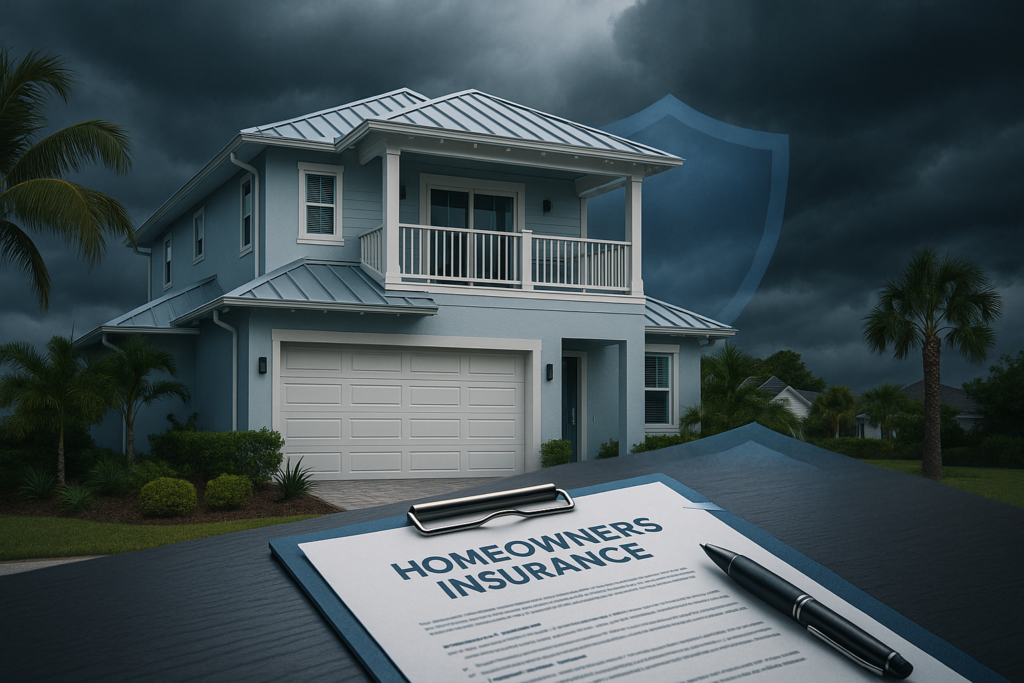
You can love the house all day long. If the insurance company hates the roof, the electrical panel, the plumbing, or the HVAC, none of that matters.
Quick answer: A Florida 4-point inspection is an insurance-focused inspection of the roof, plumbing, electrical, and HVAC systems. Carriers usually require it on older homes, often around 20 years old, sometimes younger, to decide whether they will write coverage and on what terms.
It is not the same thing as a full home inspection. And if you wait to think about it until after you are under contract, you are doing this backward.
What a 4-Point Inspection Actually Includes
The inspector is looking at the four systems most likely to create major losses.
- Roof: age, material, remaining life, visible damage, active leaks, soft spots, poor repairs.
- Plumbing: pipe material, drain line condition, leaks, water heater age, evidence of past water damage.
- Electrical: service size, wiring type, panel brand, unsafe conditions, double taps, open splices, missing covers.
- HVAC: age, operation, visible condition, cooling performance, signs of leaks or failure.
This is underwriting. The carrier is not asking whether the house is charming. They are asking whether it looks like an expensive future claim.
When Florida Insurers Usually Require One
Most carriers ask for a 4-point on homes around 20 years old or older. Some start earlier. Some get stricter after storms, market exits, or underwriting losses. If you are buying an older Florida house, assume you may need one and budget for it up front.
That matters because a clean general inspection does not guarantee a clean 4-point. A home can feel fine to live in and still get hammered by insurance underwriting.
The Biggest Deal-Killers
These are the usual problems that blow up coverage or trigger repair demands:
- Old roof with limited remaining life. Even if it is not actively leaking, many carriers care about remaining useful life more than whether it made it through last week.
- Polybutylene plumbing. Florida insurers know the failure history. Some carriers refuse it outright.
- Federal Pacific, Zinsco, or similar problematic panels. These names come up constantly for a reason.
- Aluminum branch wiring or obvious electrical defects.
- HVAC systems near failure. Not always a flat denial, but definitely a red flag.
- Active leaks, staining, or evidence of deferred maintenance anywhere in the four systems.
What Buyers Should Do Before They Get Burned
- Ask about the age of all four systems before you make a strong offer.
- Get insurance quotes early. Not after the inspection period is almost over.
- Ask whether the carrier is likely to require a 4-point and wind mitigation report.
- Find out the exact roof age and panel brand. Guessing here is expensive.
- Use the results as negotiation leverage if the house has underwriting problems.
If the house needs a roof, repipe, panel swap, or HVAC replacement to be insurable, that is not a minor detail. That is part of the real acquisition cost.
4-Point vs. Wind Mitigation
People mix these up constantly.
- 4-point inspection: tells the insurer whether the house is acceptable to insure.
- Wind mitigation inspection: documents wind-resistant features that can reduce the premium.
One is about eligibility. The other is about discounts. In Florida, you often need both.
How Much It Costs
A 4-point inspection often lands somewhere around $100 to $200, depending on market and whether it is bundled with wind mitigation. Compared with the cost of buying the wrong house or scrambling to replace a roof mid-transaction, that is cheap.
Bottom Line
A Florida 4-point inspection is not paperwork theater. It is one of the fastest ways to find out whether a house is insurable, how painful the premium might be, and whether you are about to inherit expensive problems.
If you are buying an older Florida home, get serious about the four systems early. That is how you avoid falling in love with an address the insurance market refuses to touch.
Related Reading
- The 4 Things That Determine Whether You Can Even Insure a Florida Home
- Wind Mitigation Inspections in Florida
- Why Florida Homes Become Uninsurable
Sources reviewed
- HUD home inspection guidance
- American Society of Home Inspectors standards and buyer resources
- InterNACHI standards of practice
- Consumer Financial Protection Bureau home buying guidance
Official resources and reference points
This page is homeowner education, not a property-specific appraisal, legal opinion, tax advice, or lender/carrier instruction. Use these to verify the coverage language, complaint path, and Florida-specific rules before you act on a denial letter, underwriting scare, or policy summary.
See the reviewer profile and editorial team profile for who does what. OwnerHacks publishes homeowner education, not property-specific appraisal work, legal advice, tax advice, lending advice, or insurance advice.
OwnerHacks updates articles when rules, costs, or homeowner decision factors materially change. If something looks outdated, use our contact page and we will review it.