
- Quick answer: property taxes usually go up because assessed value, exemptions, or non-ad valorem charges changed, not because the county randomly targeted you
- Situation-based routing
- Worked examples: same pain, different cause
- Mistakes homeowners make here
- How Property Taxes Are Calculated
- Reason 1: Your Assessed Value Went Up
Diagnosis page. Use this when the bill jumped and you need to identify the cause before choosing an appeal, exemption, escrow, or budget fix.
Quick answer: property taxes usually go up because assessed value, exemptions, millage rates, or special assessments changed. The house does not have to change for the bill to jump.
The fix is to identify which lever moved, then decide whether you have a real appeal, exemption issue, or billing problem. If you need the full tax playbook, start with the Property Tax Guide for Homeowners.
Quick answer: property taxes usually go up because assessed value, exemptions, or non-ad valorem charges changed, not because the county randomly targeted you
The smart first move is to identify which lever changed. Was it value, millage, lost homestead, a new owner reset, or special assessments sitting on the bill? Once you know that, the next step becomes obvious. Until then, homeowners waste time fighting the wrong problem.
| If your tax bill jumped because… | What it means | What to do next | Do not do this |
|---|---|---|---|
| Assessed value rose | The county thinks the property is worth more | Check the record card, compare recent sales, and review condition issues | Assume the number must be right because the market was hot |
| Millage changed | Taxing authorities raised the rate | Read the bill line by line and track which authority changed | File a value appeal over a rate issue |
| Homestead or another exemption disappeared | Your taxable value jumped, often hard | Call the property appraiser and fix the exemption question first | Ignore the exemption section and focus only on total due |
| The property changed ownership | Assessment caps may have reset | Expect a new tax basis and recalculate escrow honestly | Assume the seller’s taxes will be your taxes |
| Non-ad valorem assessments increased | CDD, sewer, stormwater, or local charges moved | Review the bill beyond just assessed value and millage | Blame everything on market value |
Situation-based routing
- New Florida buyer: check whether the prior owner had homestead and whether your purchase triggered a reset.
- Long-time owner with a sudden jump: review exemptions and special assessments before assuming the county overvalued you.
- Escrow payment exploded: separate the property-tax increase from any insurance increase so you know which fire to put out first.
- You think the value is wrong: route next to the appeal guide, but only after reading the assessment correctly.
Worked examples: same pain, different cause
Example 1, value problem: similar homes are selling below your assessed value and the county record shows outdated facts. That points toward an appeal.
Example 2, exemption problem: you moved into a new primary residence and forgot to file homestead. The taxable value is higher because the exemption is missing, not because the assessment is crazy.
Example 3, ownership reset: the seller paid low taxes thanks to years of capped assessments. You bought the property and the next bill recalculated closer to market value. Painful, but predictable.
Mistakes homeowners make here
- Comparing this year’s total bill to last year’s total without checking each component.
- Confusing assessed value with taxable value.
- Assuming the seller’s property-tax bill transfers to the buyer.
- Filing an appeal before understanding whether the issue is value, exemptions, or rates.
Next step: use how to read your property tax bill to isolate the change, then go to the appeal guide or the exemptions guide based on what actually moved.
How Property Taxes Are Calculated
Two numbers determine your tax bill:
Assessed Value × Millage Rate = Your Tax Bill
The assessed value is the county property appraiser’s opinion of what your property is worth, or in some states, a percentage of market value. The millage rate comes from local government bodies — county, city, school district, and special districts all pile on their own portion.
When either number climbs, your taxes climb. Sometimes both move at once. Let’s dig into the usual suspects.
Reason 1: Your Assessed Value Went Up
This is the big one. County appraisers reassess property values on a regular cycle, annually in some places, every few years in others. Rising home prices in your neighborhood almost always drag your assessment up with them.
But here’s what most people don’t realize: these are mass appraisals. Nobody walked through your house. Nobody looked at your outdated kitchen or the crack in your foundation.
Counties rely on statistical models, comparable sales data, and neighborhood-wide adjustments. On average, the models work reasonably well. For individual properties? They miss. A lot. Homes with deferred maintenance, awkward layouts, or a location backing up to a busy road often get overvalued because the model simply can’t see those problems.
And that’s exactly where appeals succeed. If the county’s number doesn’t reflect what your home would actually sell for on the open market, you’ve got grounds to push back. More on how below.
Reason 2: The Millage Rate Increased
Governments spend money. When new budgets call for more (schools, fire departments, road projects, infrastructure) the millage rate ticks up. Sometimes voters approve it through a referendum. Other times, the county commission or city council bumps it within their legal authority, no public vote required.
Can you appeal a millage rate increase? No. That’s politics, not property valuation.
What you can do: show up at budget hearings, vote in local elections, and pay attention to where the money goes. Property taxes are intensely local. Your school board and county commission shape your tax bill far more than the governor or president ever will.
Reason 3: You Lost an Exemption
Homestead exemptions. Senior exemptions. Disability exemptions. Most states offer some combination, and they meaningfully lower your taxable value. But if something changed (you moved and didn’t refile, you bought a new place and forgot to apply, or an exemption simply expired), your tax bill can spike overnight.
In Florida, the homestead exemption knocks $50,722 off your assessed value and caps annual increases at 3% through the “Save Our Homes” provision. Lose it, and your assessed value rockets to full market value in a single year. Tax bills doubling because someone forgot to refile after a purchase? It happens constantly.
Look, check your bill for exemptions right now. If any are missing that you qualify for, call your county property appraiser’s office. Some can be filed retroactively.
Others have hard deadlines, here’s a full list of exemptions most homeowners miss.
Reason 4: New Construction or Special Assessments
New development in your area (a school being built, road widening, sewer system upgrades) can land on your tax bill as a special assessment. Technically these aren’t property taxes. But they show up the same way and inflate your total.
Then there are Community Development Districts (CDDs). Common in planned communities, CDD fees add $2,722–$4,722 per year on top of regular taxes. Bought in a newer subdivision? Check whether CDD assessments are baked into your bill.
How to Challenge Your Assessment
If you think the assessed value is too high, you can formally contest it. The specifics vary by state and county, but the general playbook looks like this:
- Pull your property record card. It’s on your county property appraiser’s website. Look for factual errors, wrong square footage, phantom bedrooms, an unfinished basement coded as finished. Errors like these are the lowest-hanging fruit.
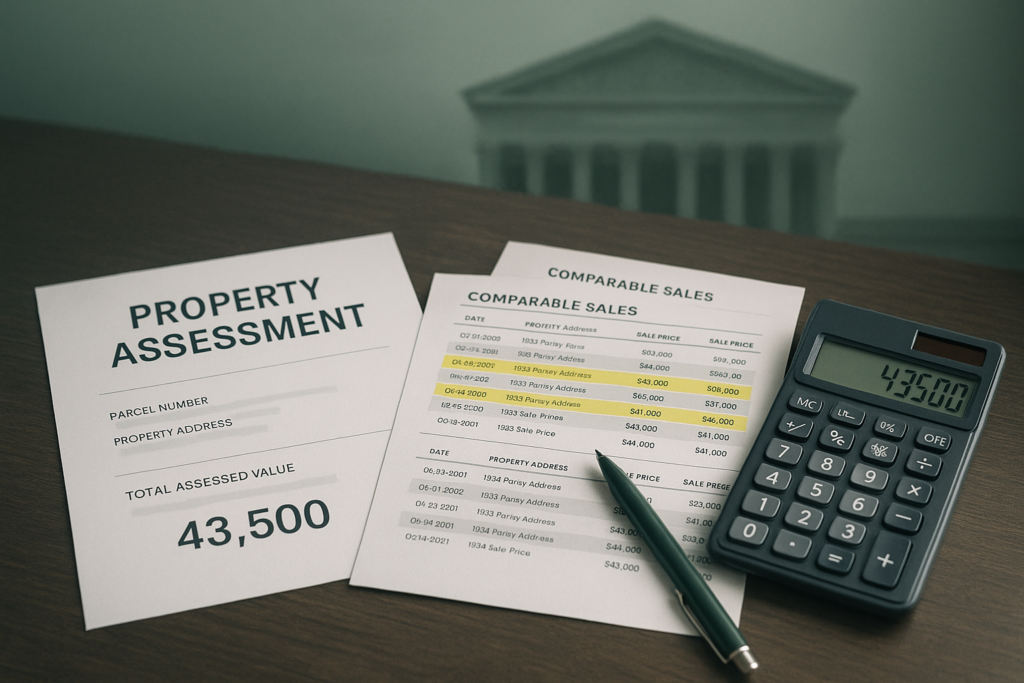
- Run comparable sales. What have similar homes in your area actually sold for recently? If your assessment exceeds those sale prices, that’s your argument.
- Document condition issues. Aging roof, outdated kitchen, foundation cracks, things the county doesn’t know about. Photos and contractor estimates make your case tangible.
- File on time. You typically get a 30–45 day window after receiving your assessment notice. Miss the deadline and you wait until next year. No exceptions.
- Show up to the hearing prepared. Bring printed comparable sales, condition photos, and your property record card with errors highlighted. Stay organized. Stay factual. Stay respectful.
Want the full playbook? See our step-by-step guide to challenging your property tax assessment.
Is It Worth Fighting?
Do the math. An assessment that’s $10,722 too high at a 20-mill rate costs you $200 per year. Over five years, that’s a thousand bucks, for what amounts to an afternoon of prep and a morning at a hearing.
Worth it? For most people, absolutely.
Now consider an assessment that’s $50,722 too high, which happens more than you’d expect after a market correction. That’s $1,722+ per year in overpayment. Fighting that is a no-brainer.
Nationally, roughly 30–40% of property tax appeals result in some reduction. You don’t need to prove the county was wildly wrong. You just need evidence showing the assessed value is higher than what the data supports.
And here’s something people forget: there’s zero downside. The county can’t raise your assessment just because you appealed.
Bottom line, don’t shrug off a higher tax bill like it’s inevitable. Dig into the numbers. Figure out what changed. And if the assessment doesn’t match reality, challenge it.
Related: How to Read Your Property Tax Assessment | Property Tax Exemptions You Might Be Missing
Sources reviewed
- Florida Department of Revenue property tax and exemption guidance
- Florida Department of Revenue Value Adjustment Board appeal guidance
- County property appraiser assessment and exemption references
- County tax collector billing and millage references
Keep Reading
- How to Challenge Your Property Tax Assessment (Step by Step)
- Florida Homestead Exemption: How to Save Thousands on Property Taxes
- The Complete Guide to Property Taxes for Florida Homeowners
Go deeper: If the increase came from local tax rates, read What Is a Millage Rate in Florida?. If the jump showed up inside your mortgage payment, read Why Your Escrow Payment Jumped After Property Taxes Went Up.
If the assessed value looks high, run the numbers first. The estimator gives you a quick read on possible savings and appeal strength.
Estimate appeal potential →Official resources and reference points
This article is general homeowner education, not legal, tax, or appraisal practice. A higher tax bill can come from assessment changes, millage changes, exemption issues, new construction, or sale-related resets, and the actual cause has to be verified from official records.
- USA.gov: state and local tax help
- Florida Department of Revenue: exemptions
- Florida Department of Revenue: appeal guidance
- Your county property appraiser or assessor site for prior-year values, exemption status, trim notice, and deadlines
Best use of these sources: compare this year’s assessed value to last year’s, verify homestead or other exemptions first, then decide whether the problem is the assessment itself, the tax rate, or a change triggered by purchase or improvements.
Official resources and reference points
This page is homeowner education, not a property-specific appraisal, legal opinion, tax advice, or lender/carrier instruction. Use the tax bill, trim notice, exemption status, and local filing deadline before you assume the problem is the assessed value itself.
Why this article is worth trusting
Caleb Hollis reviewed this page. He reviews homeowner education on home value logic, cost realism, Florida housing questions, and decision quality.
See the reviewer profile and editorial team profile for who does what. OwnerHacks publishes homeowner education, not property-specific appraisal work, legal advice, tax advice, lending advice, or insurance advice.
OwnerHacks updates articles when rules, costs, or homeowner decision factors materially change. If something looks outdated, use our contact page and we will review it.