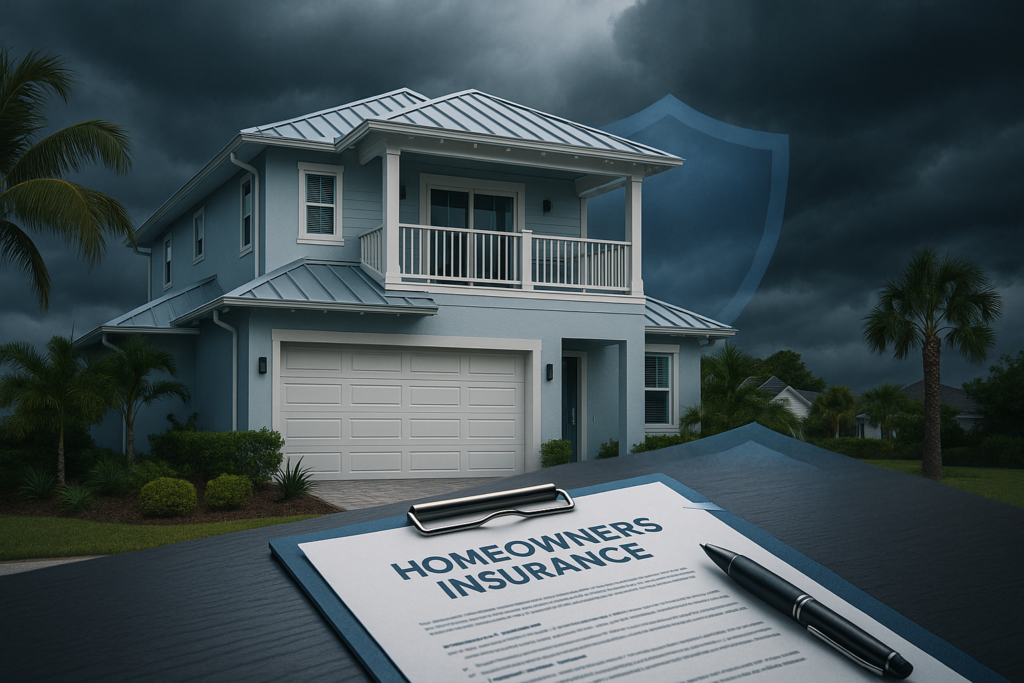
Quick answer: wind insurance in Florida usually covers direct physical damage caused by wind or hail, but the payout depends heavily on your deductible, roof settlement terms, exclusions, and the path the damage took. The argument is often not whether wind happened. It is whether the policy treats the resulting damage the way you assumed.
Need the bigger Florida insurance roadmap? Start with the Homeowners Insurance Guide.
| If your question is… | Usually yes or no | What controls the answer | Best next move |
|---|---|---|---|
| Does standard Florida homeowners insurance usually cover wind damage? | Usually yes | Policy form, exclusions, and storm deductible | Check your named-storm or hurricane deductible now |
| Will roof damage be paid at full replacement cost? | Not always | Roof settlement language and endorsements | Read the roof payment terms, not just the coverage label |
| Does wind-driven rain always get covered? | Not automatically | Whether wind created an opening and how the policy defines the loss | Review water and opening language carefully |
| Will the deductible be painful? | Often yes | Percentage hurricane or named-storm deductible | Convert the percentage to dollars tonight |
Florida wind coverage usually protects storm damage, but deductibles, exclusions, and opening-created-loss fights decide how painful the claim becomes.
The policy may cover wind-driven damage to the roof, structure, and sometimes interior damage tied to the event, but the real answer turns on deductible size, water-intrusion wording, and the exact policy language.
Florida owners get misled by the phrase “wind coverage” like it is one clean promise. It is not. The claim outcome changes fast when hurricane deductibles, roof language, and opening-created-loss rules come into play.
Scenario picker
Check storm claim exposure
Best for: you want to know what a wind event could actually pay
Why it wins: Start with deductible and loss-settlement wording, not assumptions.
Shop Florida coverage
Best for: you are comparing policies before hurricane season
Why it wins: Wind deductible and roof terms often matter more than a pretty premium.
Fight a claim dispute
Best for: the carrier is pushing back on interior or roof damage
Why it wins: Now the policy wording and event documentation are everything.
Florida wind-coverage pressure points
| Decision point | Usually covered | Common fight zone | Why it matters |
|---|---|---|---|
| Roof damage from wind event | Often yes, subject to policy terms | Age, wear, prior condition, settlement method | Roof language can cap recovery |
| Interior damage after opening | Often yes if wind-created opening is proved | Water entry disputes and causation fights | Documentation matters fast |
| Hurricane event cost | Covered loss may still trigger big out-of-pocket | High percentage hurricane deductible | Deductible can reshape the whole claim |
| Shopping policies | Base wind protection exists | Deductible, exclusions, endorsements vary hard | Premium alone is a trap |
| Claim handling | Covered storm damage can pay | Underpayment or denial fights still happen | Policy wording and evidence decide leverage |
Worked decision paths
Shingles peel off and rain enters after a named storm
Call: Potentially covered, but deductible may sting
The event may be covered while the owner still absorbs a large chunk because of the hurricane deductible.
Carrier says interior water damage was not caused by a wind-created opening
Call: Document aggressively
This is a classic Florida fight zone where photos and timeline matter.
You are shopping two policies with similar premiums
Call: Compare deductibles and roof terms first
The cheaper premium can become the expensive policy after one bad storm.
Risk and reward cards
Wind-coverage upside
- Protects against major storm damage
- Can cover structure and some interior damage
- Vital in Florida risk markets
Wind-coverage risk
- Large hurricane deductibles
- Roof and water-intrusion exclusions or limits
- Claim fights around causation
Smart-shopping upside
- Better storm resilience
- Cleaner deductible planning
- Fewer claim surprises
Smart-shopping risk
- Choosing on premium alone
- Ignoring roof settlement terms
- Assuming all storm damage gets paid the same way
Bottom line
In Florida, “wind coverage” matters, but deductible size and policy wording often matter almost as much as whether the loss is technically covered.
Best next move
Pull the deductible page, then pair this with how to read the policy, what homeowners insurance covers, and the denied-claim guide before storm season or before you fight the carrier.
What wind insurance usually covers in Florida
- Roof damage from wind events, subject to the policy’s settlement terms
- Siding, exterior components, and certain detached structures damaged by wind
- Interior damage caused because wind created a covered opening, depending on policy wording
- Some personal property damage if the covered wind event caused the loss path
- Loss of use if the covered wind damage makes the home uninhabitable and the policy supports it
What often changes the real answer
Hurricane or named-storm deductible
This is where Florida homeowners get hit first. A 2% deductible on a $500,000 dwelling limit is $10,000. The deductible is not a footnote. It is the first chunk of pain you own.
Roof settlement language
Some policies or endorsements use actual cash value, age-based settlement, or other roof-specific limits. That means wind coverage may exist, but the payment can still feel thin.
Wind-driven rain and opening requirements
If rain enters because wind created an opening, many policies may respond. If the carrier argues there was no covered opening or the water came through preexisting weakness, the fight starts there.
Maintenance and wear issues
Insurers often separate sudden storm damage from old age, deferred maintenance, and preexisting deterioration. The closer your roof was to failure before the storm, the more friction you should expect.
Decision table: where Florida owners usually get surprised
| Scenario | What owners assume | What actually matters | Practical takeaway |
|---|---|---|---|
| Shingles missing after a storm | The full roof will be covered | Deductible, roof settlement terms, age, and repairability | Coverage can exist without a clean full-replacement result |
| Rain damages ceilings after strong wind | Rain damage automatically follows | Whether wind created a covered opening | Document the storm path and opening evidence fast |
| Policy says “wind covered” | The issue is simple | Exclusions, deductible, endorsements, and claims handling | The label is only the start |
| Owner chose a cheaper policy | They mainly saved premium | They may also have taken on harsher roof math and more retained risk | Cheap wind coverage can become expensive self-insurance |
Worked examples
Example 1: Covered loss, disappointing net payment
A Florida homeowner suffers clear wind damage to the roof. The dwelling limit is $400,000 and the hurricane deductible is 2%, so the deductible alone is $8,000. The roof settlement language is less generous than expected. Result: the claim is covered in principle, but the homeowner still feels like the policy came up short. That is common.
Example 2: Wind plus water dispute
Heavy wind and rain hit. Interior staining appears. The owner assumes wind damage means rain is covered too. The carrier focuses on whether wind created an opening or whether preexisting deterioration let water in. The fight becomes causation and policy wording, not just weather.
Example 3: Older roof under pressure
The roof already had visible wear. After a storm, some shingles lift and water gets in. The owner sees a storm claim. The insurer sees a storm layered on top of age and condition. The worse the prior condition, the more likely the claim gets narrowed or scrutinized.
Big mistakes Florida homeowners make
- Mistake 1: not converting the percentage deductible into dollars.
- Mistake 2: assuming any wind loss means full roof replacement.
- Mistake 3: ignoring roof endorsements and settlement wording at renewal.
- Mistake 4: documenting the damage poorly or too slowly.
- Mistake 5: focusing on premium while skipping insurability and claim practicality.
How to check your Florida wind coverage tonight
- Find the declarations page and identify the hurricane or named-storm deductible.
- Convert that percentage to a dollar number.
- Search the policy for roof settlement wording and endorsements.
- Check the exclusions and any opening or interior-water language.
- Ask your agent: “On my current policy, how would a 15-year-old roof wind claim actually be settled?”
Bottom line
Florida wind insurance usually covers direct wind damage. That part is not the hard part. The hard part is deductible math, roof payment terms, and proving how the damage happened. If you understand those three things, you understand far more than most policyholders do before the storm arrives.
Best next step: Read wind mitigation inspection guide, what determines whether a Florida home is insurable, and how to read your homeowners insurance policy.
Sources reviewed
- Florida Office of Insurance Regulation homeowners windstorm resources
- Citizens Property Insurance underwriting and wind coverage references
- Florida Department of Financial Services storm-claim guidance
- Florida hurricane deductible notice and policy-form references
Official resources and reference points
This page is homeowner education, not a property-specific appraisal, legal opinion, tax advice, or lender/carrier instruction. Use these to verify the coverage language, complaint path, and Florida-specific rules before you act on a denial letter, underwriting scare, or policy summary.
Why this article is worth trusting
Caleb Hollis reviewed this page. He reviews homeowner education on home value logic, cost realism, Florida housing questions, and decision quality.
See the reviewer profile and editorial team profile for who does what. OwnerHacks publishes homeowner education, not property-specific appraisal work, legal advice, tax advice, lending advice, or insurance advice.
OwnerHacks updates articles when rules, costs, or homeowner decision factors materially change. If something looks outdated, use our contact page and we will review it.