
Quick answer: a wind mitigation inspection documents hurricane-resistant features that can earn insurance discounts, especially in Florida. It does not replace a 4-point inspection. A wind mitigation report is about discounts and resilience. A 4-point is about insurability and underwriting risk.
Need the full insurance cost strategy? Start with the Homeowners Insurance Guide.
| If you want to know… | Wind mitigation inspection | What to do next |
|---|---|---|
| Can I cut premium because my house is built better against storms? | Yes, that is the point | Get the report and send it to the carrier or agent |
| Will this tell me whether the carrier will write the policy at all? | Not by itself | Use a 4-point when underwriting asks for one |
| Is it worth paying for? | Usually yes when the home has post-code roof work or visible mitigation features | Estimate likely discount before deciding |
| What features matter most? | Roof-to-wall connection, roof shape, roof deck attachment, opening protection, secondary water resistance | Collect permit and roof paperwork before the inspection |
Wind-mitigation route
- You have a newer or upgraded roof system: check whether documented mitigation credits are being missed.
- You are buying an older Florida home: verify clips, decking, secondary water resistance, and opening protection.
- You only want a premium cut: make sure the home likely has real mitigation features before spending money.
Risk flags homeowners miss
- No proof usually means no credit.
- Wind mitigation can lower premium without fixing broader insurability problems.
- Owners confuse roof age alone with the specific mitigation features carriers actually reward.
What a wind mitigation inspection checks
The inspector is documenting specific structural and opening-protection features tied to storm resistance and insurer discounts.
- Roof covering age and code compliance
- Roof deck attachment, like nail pattern and fastening strength
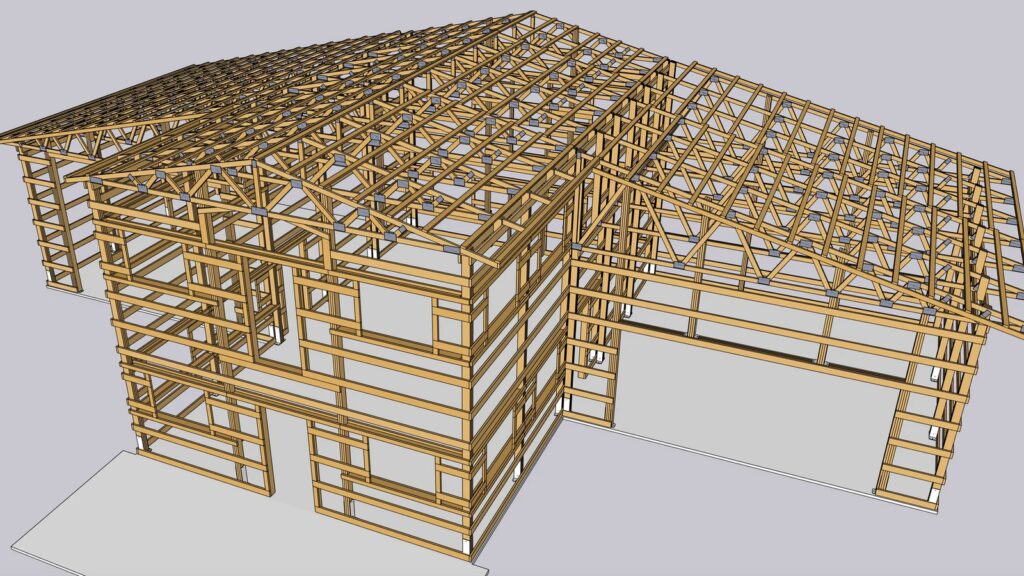
- Roof-to-wall connection, such as clips, wraps, or toe nails
- Roof shape, especially hip versus gable performance
- Secondary water resistance, like self-adhered underlayment
- Opening protection, including impact-rated windows, shutters, garage-door resistance, and protected openings
Decision table: should you order one?
| Situation | Usually worth it? | Why | Best move |
|---|---|---|---|
| You replaced the roof after code upgrades or know the house has clips, wraps, or impact protection | Usually yes | The report may unlock meaningful discounts | Gather permit docs before inspection day |
| The home is older and you have no idea what is under the roof covering | Maybe | Savings depend on what can be documented | Ask the inspector what evidence they need |
| You only need insurance approval, not discounts | Not enough by itself | Wind mitigation does not replace underwriting inspection | Use a 4-point if the carrier requires one |
| Your premium jumped hard after renewal | Often yes | Discount recovery can be one of the cleanest cost fixes | Compare the report cost against one-year savings |
Worked examples
Example 1: Strong candidate
A homeowner paid $125 for the inspection after a newer roof install. The report documented a qualifying roof covering, improved roof deck attachment, and opening protection. The annual premium dropped by roughly $900. That is an easy payback.
Example 2: Weak candidate
An older home had no documented opening protection, unclear roof deck details, and a gable roof. The report still helped clarify the house profile, but discounts were modest. Useful, yes. Life-changing, no.
Where homeowners misread the process
- Mistake 1: thinking the report will create discounts for features the inspector cannot verify.
- Mistake 2: confusing this with a 4-point. They solve different problems.
- Mistake 3: forgetting to send the completed report back to the carrier or agent.
- Mistake 4: assuming every improvement earns equal credit. Some features move the premium more than others.
How to get the best result from the inspection
- Pull roof permits, invoices, and product approvals if you have them.
- Know the year the roof was installed or replaced.
- Confirm whether shutters, impact glass, or garage protection cover all required openings, not just some.
- Ask the insurer to re-rate the policy after the report is submitted.
- Re-check the report after major roof work because the credit profile may improve.
Wind mitigation vs 4-point, the clean version
| Question | Wind mitigation | 4-point |
|---|---|---|
| Main purpose | Earn discounts by proving storm-resistant features | Help carrier judge underwriting risk on four core systems |
| Best for | Lowering premium | Securing or preserving coverage |
| Focus | Roof structure and opening protection | Roof, electrical, plumbing, HVAC |
| Typical outcome | Credits, no change, or occasionally disappointment | Approval, repair demand, limited quote, or declination |
Bottom line
A wind mitigation inspection is one of the rare homeowner moves that can be cheap, fast, and genuinely useful. It is most valuable when the house actually has documentable storm-resistant features and you follow through by getting the carrier to re-rate the policy.
If this, do this next
- You need the Florida-specific breakdown: read the Florida wind mitigation guide next.
- You are also worried about a 4-point inspection: compare the two because they solve different underwriting problems.
- You are checking storm coverage overall: pair this with the wind coverage and hurricane deductible guides.
Best next step: Read how to cut homeowners insurance costs, then compare this guide with Florida 4-point inspection so you separate discount opportunities from true coverage threats.
Official resources and reference points
This page is homeowner education, not a property-specific appraisal, legal opinion, tax advice, or lender/carrier instruction. Use these to verify the coverage language, complaint path, and Florida-specific rules before you act on a denial letter, underwriting scare, or policy summary.
Why this article is worth trusting
Caleb Hollis reviewed this page. He reviews homeowner education on home value logic, cost realism, Florida housing questions, and decision quality.
See the reviewer profile and editorial team profile for who does what. OwnerHacks publishes homeowner education, not property-specific appraisal work, legal advice, tax advice, lending advice, or insurance advice.
OwnerHacks updates articles when rules, costs, or homeowner decision factors materially change. If something looks outdated, use our contact page and we will review it.