
Your house doesn’t check a calendar. Stuff breaks, wears out, and quietly falls apart regardless of whether you’re watching. What separates a home that holds its value from one that doesn’t? Maintenance — done right, done on time.
Want the whole maintenance cluster in one place? Start with the Home Maintenance Guide for Homeowners.
And no, this isn’t another “clean your gutters” listicle. This is the maintenance that actually moves the needle, organized by season so you know when to act.
Spring (March – May)
Winter just beat up your house. Spring is when you find out how badly.
Exterior
- Grab binoculars and walk the entire roof line from the ground. Missing shingles? Cracked ones? Curling edges? A single bad storm can peel back flashing you didn’t know was vulnerable.
- Scan your foundation for fresh cracks. Hairline stuff that showed up over winter? Probably fine. But horizontal cracks, or anything wider than 1/4 inch — need professional eyes. Don’t guess on that one.
- Gutters. Clean them, inspect them, take them seriously. Clogged gutters redirect water straight toward your foundation, and that’s the number-one cause of basement and crawl space water intrusion. Entirely preventable.
- Turn on every exterior spigot and check the connection points for leaks. Frozen pipes sometimes crack quietly, only revealing the damage once water pressure hits them in spring.
HVAC
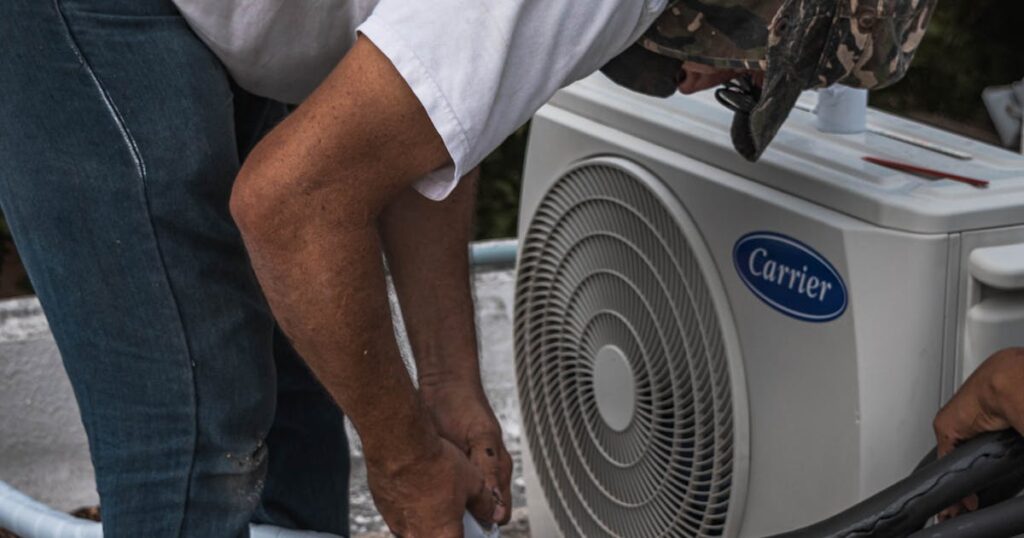
- Book your AC tune-up now — before summer hits. Wait until June and you’re fighting everyone else for a technician. And if it fails on the first scorching day? Emergency rates. Not fun.
- Swap out that air filter. If it’s been in there since fall, it’s long overdue. A clogged filter forces your system to work 15–25% harder than it should.
Landscaping
- Spot any areas where water pools near the house? Re-grade the soil away from your foundation. The target: a 6-inch slope over the first 10 feet from the foundation walls.
- Cut back any branches hanging over the roof or within 6 feet of the house. Trees touching your roofline invite pests and trap moisture. And here’s a bonus. Your insurance company may actually lower your premium once those overhanging limbs are gone.
Summer (June – August)
Your home works hardest in summer. Your job is keeping everything running efficiently while it does.
Cooling System
- That programmable thermostat? Actually program it. A “smart” thermostat left on default settings saves you exactly nothing. Bump it 4–5 degrees when you’re out of the house.
- Your outdoor AC unit needs breathing room — two feet of clearance on every side, minimum. Bushes, mulch piles, and debris choke airflow and tank efficiency.
- Peek at the ductwork in your attic or basement. Look for disconnected joints, crushed flex duct, or visible gaps. Leaky ducts bleed 20–30% of your cooled air into spaces you’re not trying to cool.
Water
- Check the caulking around windows, doors, and where siding meets trim. Caulk costs a few bucks. Water damage costs thousands. Easy math.
- Test your water heater’s pressure relief valve — lift the lever, let it snap back. Water should flow briefly, then stop. If it doesn’t flow at all, or keeps dripping, replace the valve. This is a safety item, not a suggestion.
- Got a sprinkler system? Walk every zone while it’s running. Heads that won’t pop up, ones spraying the sidewalk, or any creating puddles near the foundation — all need fixing.
Deck and Patio
- Power wash the deck. Then inspect for soft spots and splintering boards. One rotting joist can compromise the structural integrity of the entire thing.
- Drop some water on the deck surface. Does it bead up? You’re good. Does it soak in? Time to reseal or restain. That test takes five seconds.
Fall (September – November)
Fall is about hardening. Everything you do now is prep for winter’s worst.
Heating
- Get your furnace or heat pump inspected. Same reasoning as the spring AC check — handle it before you actually need the system.
- Run the heat for a full cycle before the first genuinely cold night. Discovering your furnace is dead at 2 AM in November? That’s a miserable way to learn.
- Use your fireplace? Get the chimney inspected and swept. Creosote buildup starts fires. This isn’t a “nice to have”. It’s non-negotiable.
Weatherproofing
- Test the weatherstripping on every exterior door. Close it on a dollar bill — if the bill slides out with no resistance, that seal is done. You’re literally heating the outdoors.
- Check your attic insulation. Can you see the tops of the ceiling joists? You need more. Insulation should be level with, or above — the joists. This is one of the highest-ROI upgrades any homeowner can make.
- Disconnect all garden hoses from outdoor spigots. A hose left attached traps water, and the pipe behind that spigot can freeze and burst inside your wall. Quiet disaster.
Exterior
- Gutters again. Yes, again. Fall leaves are the worst offenders, and you just cleaned these in spring for a reason.
- Seal every gap in your foundation or siding where pests could squeeze through. Mice can fit through a hole the size of a dime — so expanding foam and steel wool are your best friends here.
- Inspect the driveway and walkways for cracks. Water seeps in, freezes, expands, and widens the crack with every freeze-thaw cycle. Seal them now before winter makes it worse.
Winter (December – February)
Winter is defense mode. Less outdoor work. More watching, more monitoring, more staying ahead of problems before they escalate.
Pipes
- Do you know where your main water shutoff is? Find it now. When a pipe bursts, the first 60 seconds determine whether it’s a problem or a catastrophe. Fumbling around searching while water sprays everywhere. That’s how serious damage happens.
- When extreme cold rolls in, open the cabinet doors under sinks on exterior walls. Let warm air reach those pipes. If temps drop below 20°F, set faucets to a slow drip.
- Wrap exposed pipes in the garage, basement, and crawl space with insulation. It costs a few dollars and takes minutes. There’s no reason not to.
Interior
- Test every smoke detector and CO detector. Replace batteries even if they’re silent. And check the date on the back of your CO detectors — they expire after 5–7 years. Most people don’t know that.
- Flip your ceiling fans to reverse (clockwise, low speed). This pushes warm air down from the ceiling. Sounds gimmicky. Actually works, especially in rooms with tall ceilings.
- Hold a lit candle near the edges of your windows. If the flame flickers, you’ve got air leaking in. Quick fixes: window film kits or draft snakes at the sill.
Roof and Ice
- After heavy snowfall, check for ice dams along the eaves. Ice dams trap melt water and force it under your shingles, and into your home. Icicles forming along the gutter line? That usually points to an insulation or ventilation issue in the attic.
- Whatever you do, don’t chip ice off the roof yourself. You’ll destroy shingles. Instead, lay a stocking filled with calcium chloride across the dam, or call a professional.
The Master Calendar Trick
Four reminders on your phone. First Saturday of March, June, September, and December. Each one triggers a walk-through using that season’s maintenance checklist. Two hours, four times a year. That catches roughly 90% of problems before they turn expensive.
Look. Your home is probably the most valuable thing you own. Staying on top of this stuff isn’t exciting. But homeowners who do it spend dramatically less on emergency repairs. And when it’s time to sell? Their homes hold value. That’s the payoff.
Sources reviewed
- HUD home maintenance guidance
- Insurance carrier seasonal loss-prevention checklists
- EPA home ventilation and moisture guidance
- Standard manufacturer maintenance schedules for roof, HVAC, and plumbing systems
Keep Reading
- When Should You Replace Your Roof? Signs, Costs, and Timing
- Should You Waive Your Home Inspection? (Probably Not)
- How to Lower Your Property Taxes: 7 Strategies That Actually Work
Official resources and reference points
This page is homeowner education, not a property-specific appraisal, legal opinion, tax advice, or lender/carrier instruction. Use these when a project decision affects safety, permits, energy cost, resale, or insurability and you want something sturdier than a contractor sales pitch.
See the reviewer profile and editorial team profile for who does what. OwnerHacks publishes homeowner education, not property-specific appraisal work, legal advice, tax advice, lending advice, or insurance advice.
OwnerHacks updates articles when rules, costs, or homeowner decision factors materially change. If something looks outdated, use our contact page and we will review it.