
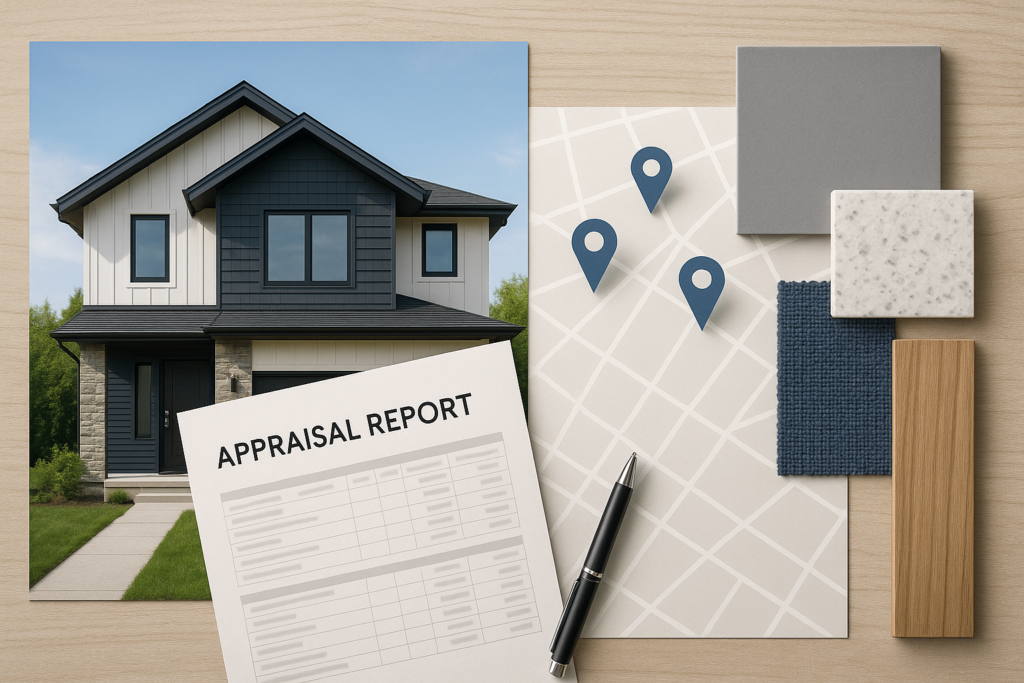
- Appraisers are not grading your effort. They are measuring buyer behavior.
- Scenario picker
- Decision matrix
- Worked decision paths
- Risk and reward cards
- Bottom line
Show all sections
- The Core Rule: Cost Is Not the Same as Value
- What Appraisers Are Actually Trying to Answer
- The Four Buckets of Value Thinking
- 1. Location and Site Utility
- 2. Size, Layout, and Functional Usefulness
- 3. Condition Is Not Cosmetic Nitpicking
- 4. Market-Supported Feature Premiums
- Why Upgrades Get "Partial Credit"
- The Renovation Hierarchy: What Usually Helps Most
- Appraisers Are Comparing You to the Actual Competition
- A Simple Example of Adjustment Thinking
- Why Sellers and Appraisers Often Clash
- Resale Thinking: Will This Improvement Help Later?
- The Hidden Value Killer: Inconsistency
- Replacement Cost vs Market Value
- What Homeowners Should Do Before an Appraisal
- OwnerHacks Quick Take
- Bottom Line
- Sources reviewed
Appraisers are not grading your effort. They are measuring buyer behavior.
The market pays for competition, condition, utility, and comps. Receipts only matter when they change those things in a way buyers will actually reward.
Scenario picker
Before renovating
Best for: you want payoff instead of ego spending
Why it wins: This helps separate useful improvements from expensive personal taste.
Before selling
Best for: you want to predict buyer objections
Why it wins: Condition, consistency, and neighborhood-supported upgrades do more work than hope.
Before an appraisal
Best for: you want to frame the home correctly
Why it wins: Bring facts, comps, and upgrade notes, not emotional math.
Decision matrix
| Value lens | What owners often focus on | What appraisers focus on | Usually better |
|---|---|---|---|
| Renovation spend | Invoices and effort | Market-supported premium | Appraiser lens |
| Condition | Cosmetic pride or defensiveness | Buyer risk and repair burden | Appraiser lens |
| Comp selection | Highest nearby number | Most comparable recent sales | Appraiser lens |
| Resale logic | What should be worth more | What buyers actually paid more for | Appraiser lens |
Worked decision paths
Luxury kitchen in a modest neighborhood
Call: Expect partial credit, not reimbursement
The market ceiling still controls.
Average finishes, strong location, clean systems
Call: Value may hold better than owners think
Site and buyer confidence often outrun decor.
Beautiful remodel plus deferred maintenance elsewhere
Call: Expect inconsistency penalties
Mismatch weakens buyer reaction.
Risk and reward cards
What helps
- Neighborhood-appropriate upgrades
- Clean system updates
- Realistic comp framing
What backfires
- Overimproving past the market ceiling
- Treating cost as value proof
- Ignoring site or condition negatives
Bottom Line
If you want a value opinion that holds up, think like a buyer comparing alternatives, not like an owner defending receipts.
Best next move
Read this alongside what affects home value, replacement cost vs market value, and what to do when an appraisal comes in low.
Most homeowners think about value the way sellers think about value.
That is the first mistake.
Homeowners often ask questions like:
- "We spent $70,000. Why didn’t the value go up by $70,000?"
- "My neighbor sold for X. Why isn’t my house worth the same?"
- "If Zillow says one number and the appraisal says another, who is wrong?"
- "Why does old carpet matter if the house is still functional?"
The short answer is that appraisers are not trying to reward effort. They are trying to measure what the market is likely to pay.
That means value is not built from your emotions, receipts, or hopes. It is built from buyer behavior.
This guide explains how that thinking works in the real world.
The Core Rule: Cost Is Not the Same as Value
This is the concept homeowners fight the hardest.
You can spend:
- $12,000 on landscaping,
- $28,000 on windows,
- $65,000 on a kitchen,
- $18,000 on a pool screen or outdoor area,
and the market may still not give you dollar-for-dollar credit.
Why?
Because buyers do not price houses by adding up receipts. They compare your house to alternatives and decide what premium, if any, they would pay.
OwnerHacks translation
What you spent is a cost fact.
What buyers will pay more for is a market fact.
Those are not automatically the same thing.
What Appraisers Are Actually Trying to Answer
At a practical level, an appraiser is asking:
If a typical buyer had your home and a few competing homes available, how much more or less would they likely pay for yours?
That is why the process often centers on comparable sales.
Not because comps are perfect, but because they are evidence of actual market choices.
The Four Buckets of Value Thinking
A useful way to understand appraiser logic is to break it into four buckets:
- Location and site utility
- Size, layout, and functional usefulness
- Condition and update level
- Market-supported feature premiums
If homeowners understand those four buckets, most appraisal surprises start making more sense.
1. Location and Site Utility
Some value drivers have nothing to do with your finishes.
Examples:
- Water view
- Golf course influence
- Busy road impact
- Corner lot utility or lack of privacy
- Flood zone pressure
- Neighborhood desirability and school draw
- Proximity to jobs, retail, beaches, or nuisance influences
A beautifully updated house can still be held back by its site.
An average house in a stronger location can still outperform expectations.
Example
House A
- Fully updated interior
- Backs to a major road
House B
- Less updated interior
- Quiet interior lot with better privacy
Many homeowners assume House A wins automatically. Markets do not always agree.
2. Size, Layout, and Functional Usefulness
Square footage matters, but not all square footage is equally valuable.
Buyers care about usefulness.
Features that usually matter
- Total living area
- Bedroom and bathroom count
- Split plan vs awkward bedroom placement
- Ceiling height and natural light
- Open flow vs chopped-up layout
- Usable flex space
- Garage function
- Storage
Features that often disappoint owners
- Weird additions with poor flow
- Enclosed spaces that do not feel like true living area
- Overbuilt specialty rooms that narrow buyer appeal
- Large square footage with clumsy layout
A smaller house with better utility can outperform a larger one with awkward function.
3. Condition Is Not Cosmetic Nitpicking
Homeowners often hear condition comments and feel judged. That is not really what is happening.
Condition matters because buyers translate visible wear into money, inconvenience, and risk.
What buyers infer from tired condition
- More cash needed after closing
- More projects
- More uncertainty
- More maintenance surprises
Condition categories that matter in practice
- Roof age and apparent condition
- Flooring wear
- Paint and finish quality
- Kitchen and bath modernization
- Signs of deferred maintenance
- Mechanical updates like HVAC, plumbing, and electrical
- Overall consistency of care
Condition is not just about beauty. It is about confidence.
Buyers pay more for houses that feel easier and safer to own.
4. Market-Supported Feature Premiums
Some features add value. The problem is homeowners tend to overestimate the premium.
Features that can matter
- Renovated kitchen
- Updated baths
- Pool, depending on market and price point
- Covered outdoor living in the right climate
- Energy-efficient improvements
- Better garage or workshop utility
- Waterfront or premium lot characteristics
But the premium depends on context
A renovated kitchen in a neighborhood where updated homes consistently sell higher? Good.
A luxury chef’s kitchen in a modest market where buyers are budget constrained? The premium may be much smaller than the owner expects.
A pool in Florida? Often meaningful.
A pool in a buyer segment worried about insurance, maintenance, and safety? Less automatic than owners think.
Why Upgrades Get "Partial Credit"
This is where homeowners get irritated.
Example
You spend:
- $55,000 on a kitchen
- $22,000 on baths
- $14,000 on flooring and paint
You expect maybe $91,000 back in value.
But if competing updated homes are only selling about $40,000 to $55,000 above dated homes, that is your answer. The market may appreciate the work without reimbursing every dollar.
Why that happens
- Some spending is maintenance catch-up, not premium creation
- Some spending exceeds neighborhood norms
- Buyers value the finished result, not your contractor invoice
- Softening markets shrink upgrade premiums
The market is not ungrateful. It is just price-sensitive.
The Renovation Hierarchy: What Usually Helps Most
This is not a universal rule, but in many neighborhoods the value hierarchy looks something like this:
Usually strongest impact
- Fixing deferred maintenance
- Correcting obvious obsolescence
- Updating kitchens and baths to neighborhood-appropriate standards
- Improving curb appeal and first impression
- Functional improvements that broaden buyer appeal
Often moderate impact
- Flooring, paint, lighting, fixtures
- Smart exterior improvements
- Outdoor living upgrades in the right market
Often weak ROI if overdone
- Highly customized luxury finishes
- Niche hobby spaces
- Very expensive materials beyond neighborhood expectations
- Projects buyers perceive as taste-specific rather than market-standard
Appraisers Are Comparing You to the Actual Competition
Homeowners sometimes compare their house to the best listing they saw online.
Appraisers usually care more about the homes buyers actually chose between.
That means the relevant question is not:
"What is the nicest home anywhere nearby?"
It is:
"What similar alternatives sold, and what differences mattered enough to move price?"
That is a much more grounded question.
A Simple Example of Adjustment Thinking
Imagine three similar sales in the same area:
Comp 1
- Sold for $420,000
- Similar size
- More updated kitchen and baths
Comp 2
- Sold for $405,000
- Similar condition
- Slightly smaller site utility
Comp 3
- Sold for $415,000
- Similar location
- Better outdoor living area
If your home is a little more dated than Comp 1, similar to Comp 2, and inferior outside to Comp 3, then a value around $430,000 just because you love your house is not a serious market argument.
The appraiser is trying to reconcile the pattern, not chase the highest hopeful number.
Why Sellers and Appraisers Often Clash
Sellers focus on:
- what they spent,
- what they need,
- what their agent hopes,
- what the hottest listing says.
Appraisers focus on:
- what closed,
- how similar it was,
- how buyers likely reacted to the differences,
- whether the final number fits the broader market behavior.
Those are different jobs.
Resale Thinking: Will This Improvement Help Later?
A better homeowner question is not just "Will this add value now?"
It is:
- Will this make my house easier to sell?
- Will it reduce buyer objections?
- Will it help my house compete better?
- Will the market likely pay at least some premium for it?
That is smarter than chasing mythical 100% payback.
Improvements that often help resale even when ROI is imperfect
- Fresh, neutral interior presentation
- Clean, functioning systems
- Updated kitchens and baths within neighborhood norms
- Strong curb appeal
- A roof and major systems that do not scare buyers
These things may not always create huge over-market premiums, but they often protect value and improve marketability.
The Hidden Value Killer: Inconsistency
Buyers notice mismatch.
Examples:
- Gorgeous kitchen, but old roof and stained ceilings
- Luxury primary bath, but original guest areas and tired flooring
- Fresh exterior paint, but outdated electrical and plumbing issues
Inconsistent improvement can still help, but it may not create the polished market reaction owners expect.
A coherent, well-maintained house often performs better than a half-luxury, half-deferred-maintenance house.
Replacement Cost vs Market Value
Another major confusion point:
Replacement cost
What it may cost to rebuild the house.
Market value
What the overall property is worth in the current market.
These numbers can diverge. A house can cost a lot to build or rebuild and still have a market value influenced by neighborhood ceilings, site factors, and buyer demand.
That is why expensive construction or renovation does not guarantee matching market value.
What Homeowners Should Do Before an Appraisal
If you know an appraisal is coming, do this:
1. Prepare a short upgrade sheet
Include:
- project,
- date,
- approximate cost,
- and why it matters functionally.
2. Clean up deferred maintenance
You are not trying to trick anyone. You are removing obvious negatives.
3. Think like a buyer, not an owner
What would make someone hesitate?
4. Know realistic comps
Do not anchor yourself to the highest number online.
5. Understand that over-improving does not force value upward
The market has the final vote.
OwnerHacks Quick Take
Appraisers are not trying to insult your home.
They are trying to answer a narrower question than homeowners usually ask:
What does the market support, right now, based on comparable evidence and buyer reaction?
If you understand that, a lot of frustration disappears.
Bottom Line
The best way to think about your home’s value is not "What did I spend?" or "What do I want it to be worth?"
It is:
- How does it compete?
- What objections does it avoid?
- What real premium would a buyer pay versus nearby alternatives?
That is how appraisers think.
And if you think that way too, you will make better renovation, pricing, and resale decisions.
Sources reviewed
- Fannie Mae appraisal and comparable-sales guidance
- Freddie Mac collateral valuation guidance
- Consumer Financial Protection Bureau home value and appraisal references
- Standard residential appraisal market-value methodology and condition analysis references
If this, do this next
Official resources and reference points
This page is homeowner education, not a property-specific appraisal, legal opinion, tax advice, or lender/carrier instruction. Use these when a project decision affects safety, permits, energy cost, resale, or insurability and you want something sturdier than a contractor sales pitch.
Why this article is worth trusting
Caleb Hollis reviewed this page. He reviews homeowner education on home value logic, cost realism, Florida housing questions, and decision quality.
See the reviewer profile and editorial team profile for who does what. OwnerHacks publishes homeowner education, not property-specific appraisal work, legal advice, tax advice, lending advice, or insurance advice.
OwnerHacks updates articles when rules, costs, or homeowner decision factors materially change. If something looks outdated, use our contact page and we will review it.